
Consider the reeds, bottle, base and setting together when comparing samples.
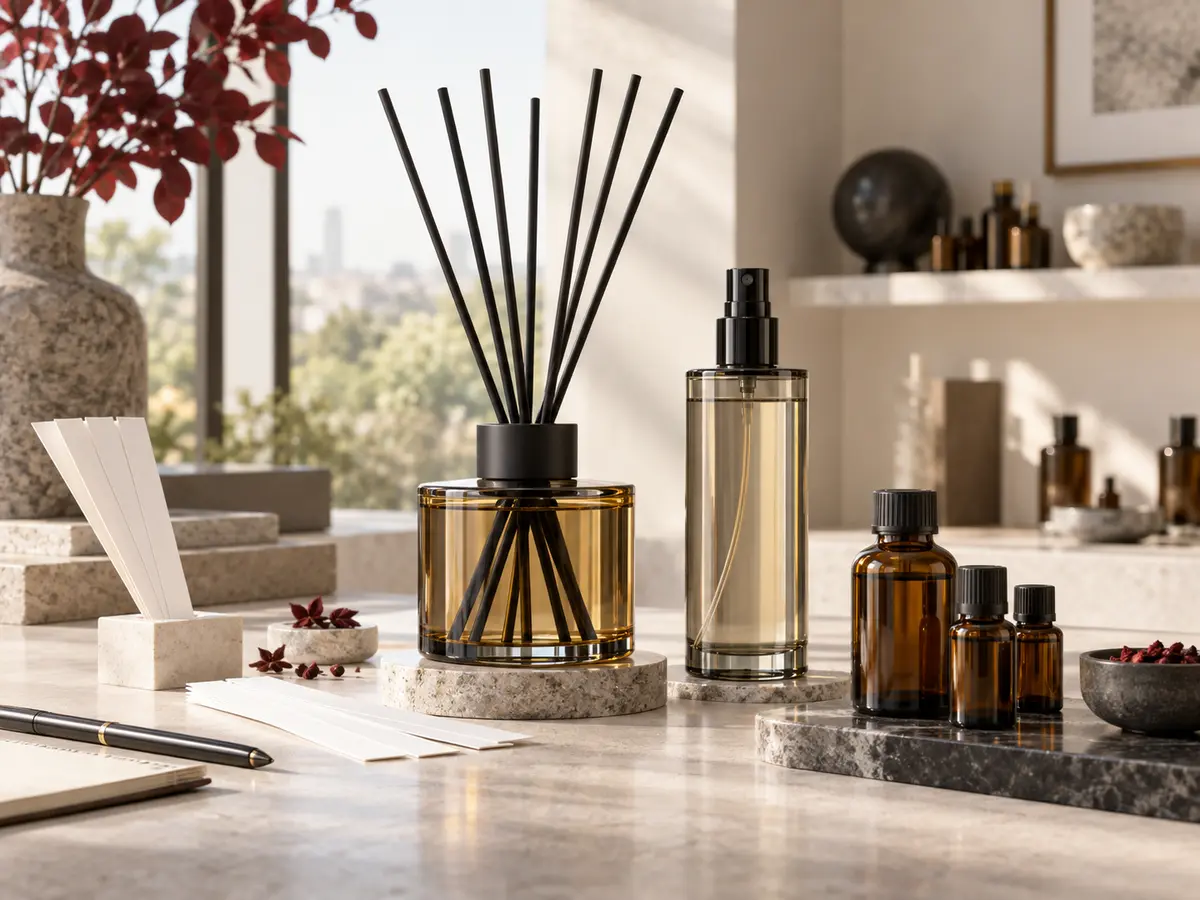
Evaluate the complete product
Do not focus only on the fragrance in the bottle. Test with the base, bottle and reeds you intend to use. Trials with different components may not represent the same finished product. Clarify the packaging and usage design before starting the comparison.
Keep trial conditions comparable
Use the same bottle type, fill quantity, reed count and similar surroundings for candidate fragrances. Changing several variables together makes the source of differences harder to identify. Give every trial a code and record its preparation date and components. Track any change as a separate trial.
Look beyond the first impression
Observe the product at planned intervals under similar conditions. Record the perceived scent character, its presence in the room and the appearance of the liquid. Take breaks between comparisons and collect other evaluators’ notes separately to help distinguish individual impressions.
Share useful feedback
Instead of simply reporting a weak scent, describe the base, reeds, trial setting and observation times. This makes the discussion more specific. Do not assume one mixing ratio suits every product; review the formulation and usage information in the relevant technical documents.